
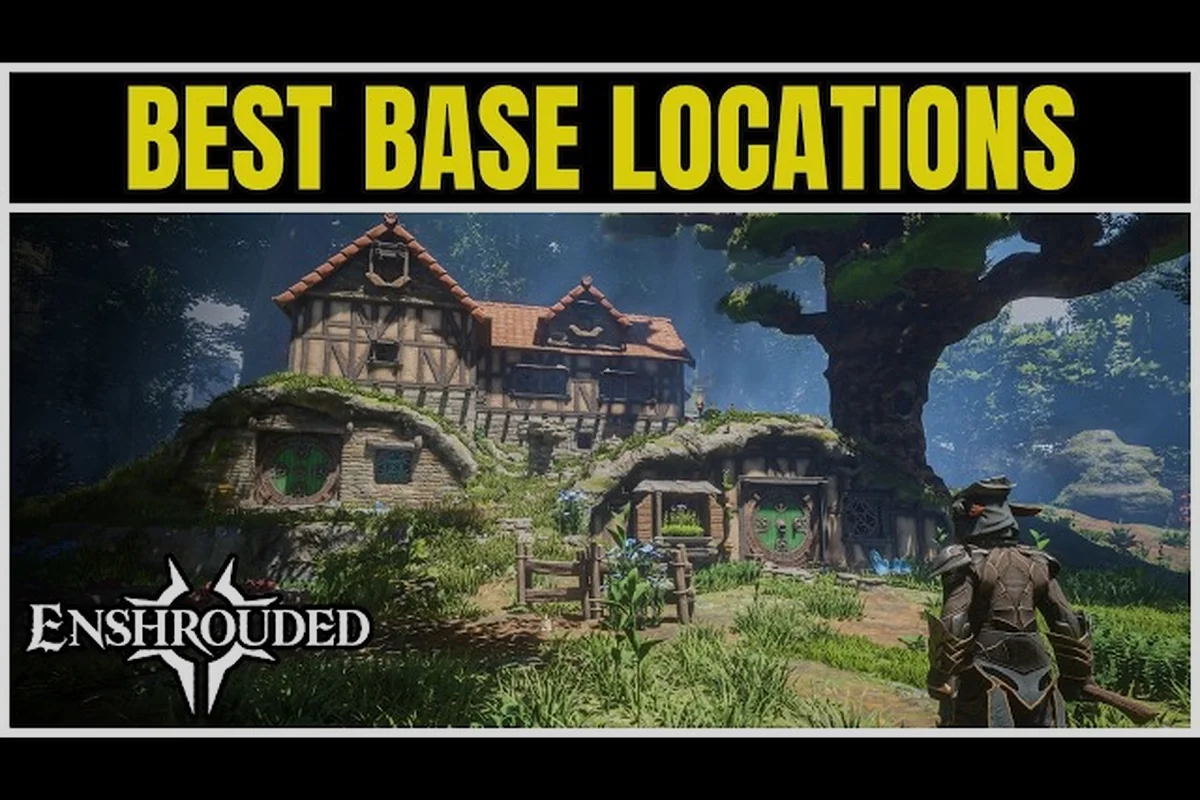
Picking the best base location in Enshrouded shapes your entire playthrough, because your Flame Altar decides where you can craft, store loot, and respawn. Flat ground, nearby resources, and distance from the Shroud matter more than a pretty view. Get the first altar right and every later expansion becomes easier.
What Makes a Strong Base Location in Enshrouded
A base is only as good as the terrain under it. Voxel building lets you terraform almost anything, but flattening a hillside costs time and materials you could spend on walls and a roof. The best base location in Enshrouded balances four factors: buildable flat area, resource proximity, safety from the Shroud, and room to grow.
The Flame Altar is the anchor of every base. It defines your build radius, acts as a fast-travel point, and lets rescued survivors settle nearby to unlock crafting stations. According to the official Enshrouded store page, the game supports up to 16-player co-op, so a generous footprint also keeps everyone's storage and workbenches from crowding each other.
The table below scores each candidate region against the four factors that matter most — flat ground, resource access, Shroud risk, and long-term growth — so you can match a biome to your current progression instead of guessing. Springlands offers the gentlest terrain and the lowest Shroud pressure, making it the safest pick for a first Flame Altar, while Revelwood trades a little flat space for hardwood and ore that upgrade your walls and crafting stations. The Nomad Highlands and Kindlewastes raise the risk with tighter buildable footprints and active Shroud pockets, so they suit mining outposts or a late-game fortress rather than a starter home.
| Region | Flat Ground | Resource Access | Shroud Risk | Best For |
|---|---|---|---|---|
| Springlands | High | Wood, stone, water | Low | First base, farming |
| Revelwood | Medium | Hardwood, ore | Low | Mid-game crafting hub |
| Nomad Highlands | Medium | Copper, salt | Medium | Mining outposts |
| Kindlewastes | Low | Obsidian, sulfur | High | Late-game fortress |
| Albaneve Summits | Low | Rare ore, ice | High | Endgame castle builds |
Springlands wins for a first altar because the terrain is gentle, the Shroud sits far from the central meadows, and basic resources are everywhere. Revelwood suits players who already have a stable starter base and want hardwood for better structures. The harsher biomes reward experienced builders who can handle Shroud timers and tougher enemies. If you want to see how storage and crafting stations fit into a compact layout, the magic chests and building blocks guide walks through the furniture that keeps a base functional.
Reading the Terrain Before You Build
Walk the area first. Look for a wide, mostly level patch with a natural boundary such as a cliff, river, or tree line that you can turn into a wall. A slight slope is fine because terraforming tools let you raise or lower ground, but avoid building on a steep hill unless you plan a multi-level design.
Check what spawns nearby. Wolves, scavengers, and Shroud creatures patrol certain zones, and a base next to a spawn point means constant interruptions. Quiet pockets between landmarks usually stay calm, which matters more than a scenic overlook once you start hauling ore home.
Why the First Altar Is a Long-Term Decision
You can place multiple altars later, but your first one sets the tone. It becomes your main warehouse, your respawn point, and the hub your survivors gather around. Moving a fully stocked base is painful, so spending ten extra minutes scouting pays off for dozens of hours.
Enshrouded Build Restrictions Explained
New players often hit an invisible wall and wonder why a wall refuses to place. That wall is a build restriction, and understanding the rules saves a lot of frustration. The Flame Altar's radius is the hard limit: anything outside it simply will not accept a placement.
Enshrouded enforces three distinct build restriction types, and each one blocks placement differently. The Flame Altar radius caps horizontal reach, no-build zones lock out landmark and town terrain, and vertical limits stop upward stacking once you pass the altar's height ceiling. A fourth, often-overlooked layer is Shroud overlap: altars placed inside deep fog prevent building entirely. Knowing which restriction you've hit tells you whether to upgrade the altar, relocate, or build outward instead of upward.
-
Altar radius — the circular zone around each Flame Altar where building is allowed. Upgrading the altar enlarges this radius.
-
No-build zones — areas the game reserves for landmarks, towns, and story locations. You cannot place blocks there regardless of altar level.
-
Vertical limits — building has a height ceiling relative to the altar, so towering spires eventually stop accepting blocks.
| Restriction | What It Blocks | How to Work Around It |
|---|---|---|
| Altar radius | Blocks outside the circle | Upgrade the Flame Altar |
| No-build zones | Landmark and town areas | Relocate to open terrain |
| Vertical cap | Very tall structures | Build outward, not upward |
| Shroud overlap | Building inside deep Shroud | Keep the altar outside the fog |
No-build zones are the most confusing because they are invisible until you try to place a block. Community reports note that most of these zones sit around major settlements and quest landmarks, so a base in open wilderness rarely runs into them.
How to Expand Your Base Area
Expanding comes down to upgrading the Flame Altar. Each upgrade raises the altar's level, which increases the build radius and unlocks more survivors and crafting tiers. The fastest route is to gather the Shroud cores and materials each upgrade demands, then interact with the altar to level it up.
The 1.0 changelog on the Steam's official announcement feed notes that reaching Flame level 11 raises the maximum number of Flame Altars in the world to 16, and that most areas previously flagged as no-build zones are now fully open for player bases. That change alone makes late-game expansion far more flexible than it was during early access.
Building Without Limits
Once you understand the rules, "building without limits" really means building smart inside them. Chain altars across a region so their radii overlap, and you effectively create one continuous buildable zone. Place a second altar on the far side of a valley and the two circles merge into a much larger canvas. Players who want faster altar upgrades should pair base work with steady leveling, since progression gates the materials you need. The leveling and skill points guide explains how to keep experience flowing while you gather.
Enshrouded Base Ideas for Every Playstyle
The best base location in Enshrouded is only half the story; what you build on it defines your experience. Voxel building supports everything from a humble cabin to a sprawling fortress, and the community shares endless inspiration on the Enshrouded subreddit.
These proven concepts map directly onto Enshrouded's build restrictions, so pick the footprint that matches your Altar tier before you commit. A Starter cabin fits comfortably inside a single Flame Altar's radius, while a Cliffside castle demands multiple overlapping Altars and careful placement outside no-build zones near Shroud roots. If your goal is enshrouded how to expand base area, the co-op compound format shows how four players can chain Altars to cover a very large footprint without hitting the build limit. Match the idea to your playstyle first, then scale the Altar network to support it.
| Base Idea | Footprint | Key Materials | Playstyle Fit |
|---|---|---|---|
| Starter cabin | Small | Wood, stone | Solo, fast setup |
| Farming village | Medium | Timber, fences | Food and crafting |
| Mining outpost | Small | Stone, ore storage | Resource runs |
| Cliffside castle | Large | Cut stone, hardwood | Showpiece builds |
| Co-op compound | Very large | Mixed tiers | 4+ players |
Starter cabins keep things simple: one room for crafting, one for storage, and a bed for the sleep mechanic. Farming villages spread out with plots, animal pens, and a kitchen, which suits players who enjoy the survival loop. Mining outposts are deliberately small so you can drop one near an ore vein and fast-travel in.
Castle Builds and Grand Designs
A castle build guide usually starts with the same advice: plan the silhouette before you place a single block. Decide where the main keep, walls, and towers sit, then terraform the ground to match. Cut stone and hardwood give the most convincing medieval look, and roof pieces hide the blocky edges of voxel walls. Lighting transforms a castle at night. Torches, braziers, and lanterns along the walls make a fortress feel lived-in rather than abandoned. The base lighting and roof guide covers the fixtures that keep a large build readable after dark.
Small Bases That Punch Above Their Weight
Not every player wants a castle. A compact base near a fast-travel point can hold every crafting station you need if you stack vertically and use magic chests for shared storage. Small bases load faster in co-op and are easier to defend, which makes them ideal for players who spend most of their time exploring.
How to Choose Between Competing Locations
When two spots look equally good, run a quick comparison against the criteria that actually affect daily play. Distance to a fast-travel point, walking time to the nearest ore, and how often enemies wander through all matter more than aesthetics.
| Priority | Weight | Why It Matters |
|---|---|---|
| Flat buildable area | High | Saves terraforming time |
| Resource proximity | High | Fewer long hauls |
| Shroud distance | Medium | Safer crafting sessions |
| Fast-travel access | Medium | Faster quest turn-ins |
| Scenic value | Low | Cosmetic only |
Flat buildable area and resource proximity should drive the decision. A base ten seconds from a stone deposit and a wood grove will out-earn a prettier spot that requires a two-minute trek for every plank. Shroud distance and fast-travel access are tiebreakers, and scenery is a bonus you enjoy after the practical boxes are ticked.
Testing a Location Before Committing
Place a temporary altar, build a quick platform, and live there for one session. Haul a few resource runs, craft a batch of items, and see how the layout feels. If the spot annoys you within an hour, tear it down and try the next candidate; the cost of an early mistake is tiny compared to relocating a finished base.
Adjusting as the Game Opens Up
Because the 1.0 update opened most former no-build zones, locations that were off-limits during early access are now fair game. Revisit old favorite spots and check whether the terrain still suits your plans, since the rules around altars and build zones have shifted.
Frequently Asked Questions
Where should I place my first Flame Altar in Enshrouded?
The Springlands meadows are the safest first choice because the ground is flat, the Shroud stays distant, and wood, stone, and water sit within a short walk. This gives you a low-risk base to learn building mechanics before you expand into harsher biomes.
Can I move my base after building it?
Yes, but the refund is partial and the relocation carries a hidden cost. Dismantling a structure returns materials at roughly a 1:1 rate for most blocks, yet anything placed inside storage chests must be manually hauled to the new site, and the old Flame Altar's upgrade progress does not transfer. Because each Flame Altar upgrade consumes Shroud cores, spawning a fresh altar at a better spot means re-farming those cores from scratch. Scouting thoroughly before committing avoids this hassle, especially once storage chests are full.
What are no-build zones and how do I avoid them?
No-build zones are invisible areas the game reserves around landmarks and settlements where blocks refuse to place. Building in open wilderness rather than next to towns usually avoids them entirely, and the 1.0 update opened most previously restricted zones.
How do I expand my base area?
Upgrade your Flame Altar by feeding it the required Shroud cores and materials. Each level increases the build radius and unlocks more survivors. Reaching Flame level 11 raises the world altar cap to 16, letting you chain altars for a much larger footprint.
Do I need a big base to progress?
No. A compact base with all crafting stations, a Flame Altar, and magic chests supports the full game, including endgame recipes. Large castle builds are a creative choice, not a requirement — and oversized footprints strain your altar's build radius, forcing earlier Shroud core farming to expand. Build only as big as your playstyle and co-op group actually need.
Choosing the best base location in Enshrouded comes down to flat ground, nearby resources, and a safe distance from the Shroud, with the Springlands as the strongest starting point. Understand the build restrictions, upgrade your Flame Altar to expand, and let your base ideas grow from a simple cabin into whatever fortress your playthrough demands.