
Updates
Enshrouded patch notes and update history: the 1.0 launch changes, the level 50 cap, the mage pass, save transfer rules and the hotfixes that followed release.
Introduction
Tracking Enshrouded means tracking a game that only recently finished its long early access. Version 1.0 arrived on October 15, 2026, closing out the story, adding the Cinder's Cradle region, lifting the level cap to fifty with equipment reaching fifty-five, and reworking the mage branch with nine new spell types, eternal versions of every spell and skeleton summoning. It also brought the game to PlayStation 5, with Xbox Series X and S planned for early 2027, and rebalanced enough of the early pacing that pre-launch advice about grinding no longer applies. For existing players the most consequential change was save transfer: early access worlds carry into 1.0, but the skill tree resets on first load and refunds your points, which was the most frequently asked question in the first day after release. Hotfix 1.0.0.1 followed within a day, and more are expected, so this section organises content by version rather than by claim about the current state of the game.
Version Timeline
| Version | Date | Headline Changes | Impact |
|---|---|---|---|
| 1.0 | Oct 15, 2026 | Complete story, Cinder's Cradle region, level 50 cap, mage pass, Sparkworks | Full release plus PlayStation 5 launch |
| Hotfix 1.0.0.1 | Within 24 hours | Post-launch stabilisation | Early issues addressed before the first weekend |
| Early access to 1.0 | On first load | Skill tree reset with points refunded, worlds carried over | Returning players respec from scratch |
| Pacing pass | With 1.0 | Extra chests, re-laid paths, reworked crafting curve | Reduced early grind versus early access |
Release Highlights
1.0 Launch
The release that finished the story and opened the final region of Embervale
Save Transfer Rules
Worlds carry forward, but your skill tree does not — the refund is intentional
Mage Rework
Nine new spell types, eternal versions of everything and skeleton summoning
Pacing Pass
New chests, re-laid routes and a smoother crafting curve in the early game
Core Mechanics
Patch interpretation in Enshrouded is mostly about knowing which claims expire. Anything phrased as the current best build, the fastest route or the strongest weapon has a shelf life measured in weeks, while anything describing a system — how the Shroud timer works, how skill points arrive, what an altar upgrade does — tends to survive balance passes intact. The 1.0 launch made that distinction unusually important because so much changed at once: the level cap moved, the mage branch was rebuilt, early progression was deliberately smoothed, and the final region opened. A consequence is that community documentation written before October 2026 can be confidently wrong rather than merely incomplete. The practical approach is to read patch notes for structural changes and treat numeric tuning as provisional, and to prefer version-anchored phrasing over claims about the present. Because hotfixes arrive quickly after a major release, this section dates its entries rather than presenting a single evolving summary.
Advantages
A version-anchored changelog is genuinely more useful than a narrative one for a game in this state, because it lets a returning player see exactly what changed since they last played instead of wading through re-explanations of systems they already know. The 1.0 launch was unusually well documented by the developer, with clear release notes covering the region, the cap increase and the mage rework, which makes accurate summaries possible rather than speculative. Because the save transfer behaviour is explained explicitly, returning players know the skill tree reset is intentional rather than a bug. The timeline structure also makes uncertainty honest: entries carry dates, so you can tell how likely a specific number is to still hold. For a game whose community is re-learning its systems, that clarity is more valuable than confident prose.
Challenges
The obvious problem is churn. Hotfix 1.0.0.1 landed within a day of release and more are expected, which means any specific balance observation can be outdated before it is read twice. Community coverage also fragments across platforms, so a change documented on one channel may be missing from another. Some systems, particularly skill point totals and Shroud Root counts, are documented from community testing performed under an earlier level cap, and those figures are now probably low rather than wrong. The game does not expose a patch history in client, so tracking change requires following external sources. Finally, version numbering in community discussion is inconsistent — early access builds, hotfixes and marketing labels all get used interchangeably, which makes it easy to attribute a change to the wrong release.
Frequently Asked Questions
What did the Enshrouded 1.0 update add?+
Do early access saves carry into 1.0?+
How often are Enshrouded patches released?+
Quick Tips
Read patch notes for structural changes and treat numeric tuning as provisional. When a patch says a region was added, a cap was raised or a branch was reworked, that information will still be accurate in a month. When it says a specific ability now deals a particular amount of damage, that number has a shelf life measured in weeks, especially in the period right after a major release. Reading notes with that distinction in mind means you can tell which parts of your knowledge need revisiting and which do not, instead of re-learning everything after every hotfix.
Expect your skill tree to reset when you return after a major update. The 1.0 launch reset early access trees deliberately and refunded the points, because balance changes across nodes made old allocations unworkable, and a similar approach is likely whenever a large rework lands. Rather than being annoyed by it, treat the refund as a chance to try something you would not have respecced into voluntarily, since the respec would have cost you a Rune per point otherwise. Bank your materials in a chest before loading a new major version so nothing is at risk.
Anchor your own notes to version numbers rather than to dates or feelings. If you write down that a particular chest contained a specific drop, record which version you were running, because hotfixes do adjust loot tables and spawn behaviour. Community documentation frequently becomes unreliable not because anyone was careless but because a patch quietly invalidated the observation and nobody rechecked. A version tag costs you five characters and tells you exactly which of your own notes to trust next time you come back after a break, which is worth far more than the effort it takes.
Featured

Enshrouded Best Settings for FPS: HDR and Brick Renderer
Squeeze more frames out of Embervale with the Enshrouded best settings for FPS, covering HDR calibration, the brick renderer and 1.0 known issues.
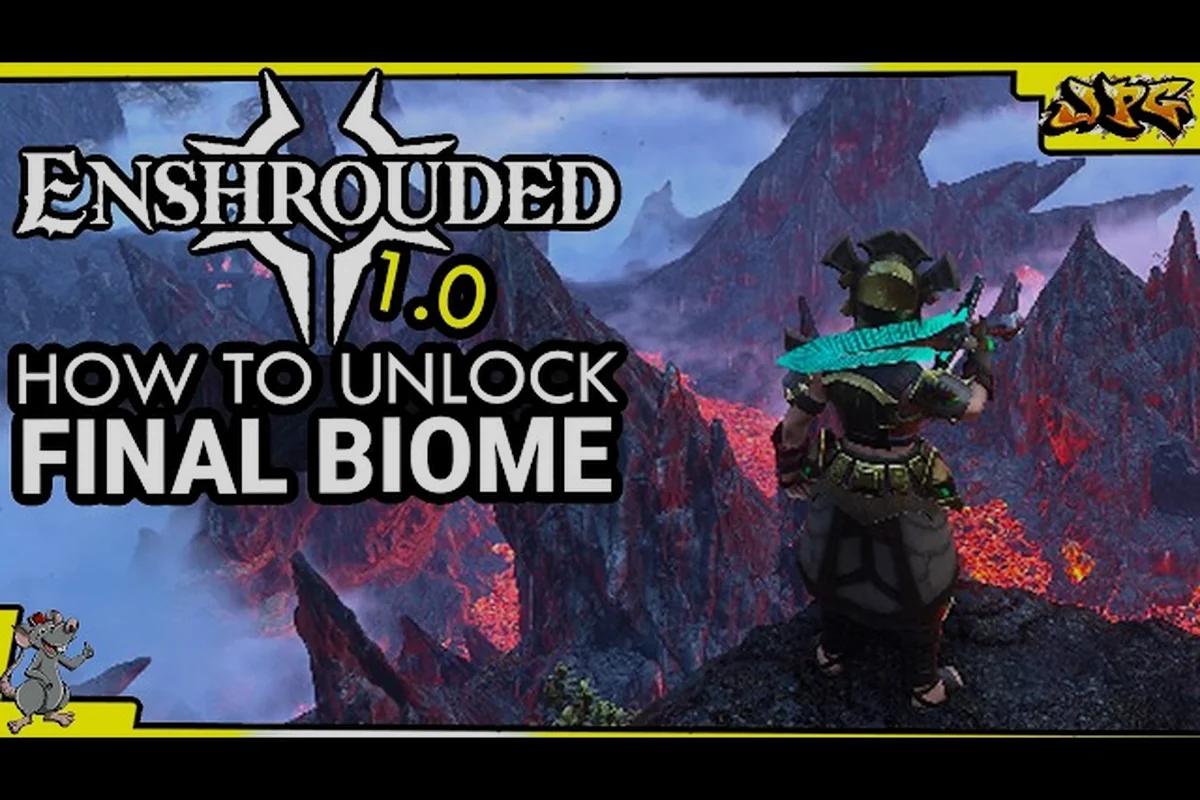
Enshrouded Cinder's Cradle Update: 12 Shroud Roots and Level Cap
Explore the Enshrouded Cinder's Cradle update: a northern biome past the Veilwater Basin, 12 fresh Shroud Roots, a raised level cap and the Sparkworks logic system.

Enshrouded Patch Notes: 1.0 Release, Hotfixes and Saves
Catch up on Enshrouded patch notes and hotfixes, see what 1.0 added on release day, and learn how Early Access saves transfer to the full game.
All Articles

Enshrouded Sales and Discounts: 1.0 Pricing and Hotfix News
Track Enshrouded sales and discounts around the 1.0 launch, plus what hotfix 1.0.0.1 changed, how the changelog reads and where the roadmap points next.
Enshrouded DLC and Expansions: Collabs, Drops and Cosmetics
See what Enshrouded DLC and expansions actually include, from the cosmetic Deluxe Upgrade Pack to the Youtooz collab, Twitch drops and seasonal events.

Enshrouded Launch FAQ: PS5, Xbox and 1.0 Save Transfer
Get the Enshrouded launch FAQ straight: PS5 and PC hit 1.0 on 15 October 2026, Xbox follows in 2027, and Early Access saves convert cleanly.