
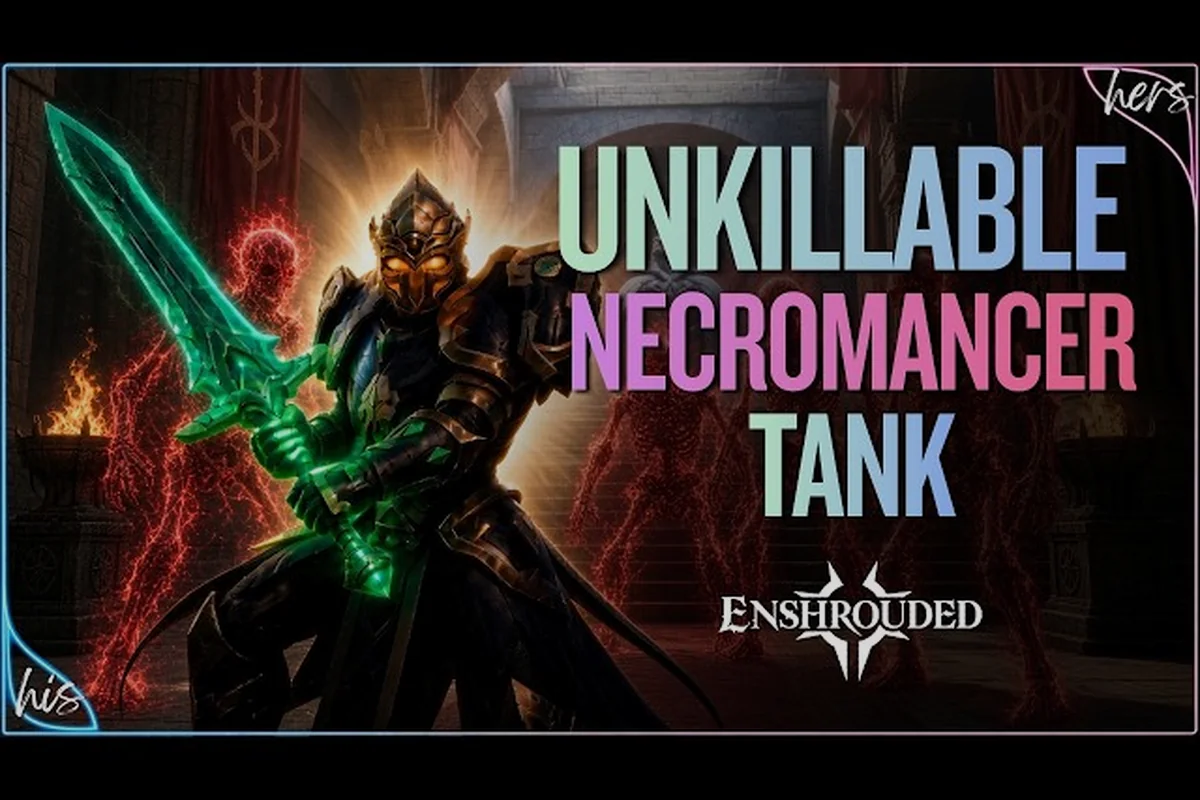
Squad wipes in Embervale rarely come from bad damage — they come from a party with no tank soaking aggro, no support keeping wands fed, and nobody watching stamina. Finding the Enshrouded best class for co-op means building around what your group lacks, not chasing the biggest numbers on a solo tier list.
Why Co-op Rewrites the Class Tier List
A class that dominates solo play can quietly sabotage a four-player run. Enshrouded supports up to 16 players in a shared world, according to the official Enshrouded site, and the moment more than one Flameborn enters the Shroud, enemy aggro, healing demand, and resource drain all scale in ways a solo build never has to answer.
The core problem is that damage dealers compete for the same kill windows. Two glass-cannon mages standing behind one another both die to the same AoE, while a single tank with a support caster behind them clears the same room with room to spare. That's why an Enshrouded class tier list built for solo play ranks the wrong things: it rewards burst and self-sustain, while co-op rewards coverage.
The 1.0 skill tree rebalance pushed this further. According to the Enshrouded 1.0 changelog on Steam, new active and passive skills were added — including Aerial Wand Attack, Wand Evasion Attack, Advanced Necromancy, Totem Mastery, Blast and Cast, Puncture, Barrage, and Survival Instinct — while unlock costs were reduced and many effects buffed. More nodes means more room to specialize, and more room to accidentally build a character that does one job your team already has covered twice.
-
Solo builds optimize for self-reliance — co-op builds optimize for what the squad is missing
-
Aggro is a resource — someone has to hold it, or your backline eats every charge
-
Mana and stamina are shared problems — one support build can carry three damage builds
-
Role overlap is the real killer — three rangers and no front line loses to content one tank trivializes
If you want the broader picture of how archetypes interact before committing points, the Enshrouded class guide breaks down the branches and how they feed into one another — which matters more than ever now that 1.0 cut unlock costs and buffed node effects, letting a single build stretch across two roles. A Battlemage, for example, can stack Intelligence for wand damage while dipping Constitution and Endurance for the survivability a co-op front line needs, rather than dumping everything into one tree the way a solo glass-cannon would. That flexibility is exactly why the tier list shifts: the question stops being "which class hits hardest" and becomes "which point spread covers the gap your squad keeps dying to."
The Co-op Role Triangle in Practice
Every functional squad fills three jobs: someone absorbs hits, someone keeps the group standing, and someone converts openings into kills. The Enshrouded best class for co-op is whichever archetype plugs the hole in your current lineup — and most groups are missing a front line, not damage.
Tank: The Aggro Anchor
The tank's job is unglamorous and decisive. Constitution and Endurance nodes raise health and stamina pools so a front-liner can hold a block through a boss combo, then still have stamina to reposition. A tank without stamina is just a slow corpse, which is why the Enshrouded constitution and endurance guide matters more here than raw armor values.
Support: The Force Multiplier
Support in Enshrouded is not a passive healer role. A wand-focused caster applying Potency and Intelligence buffs, crowd control, and steady chip damage turns three average players into a coordinated unit. The wand skills guide is effectively required reading for this slot, because wand nodes now include mobility tools like Wand Evasion Attack that let a support escape when the front line collapses.
Damage: The Closer
Damage builds exist to punish the windows the tank creates. Rangers and battlemages both qualify, but they play differently: rangers want elevation and line of sight, while battlemages want to stand inside the melee scrum and trade hits. Pick whichever your group's positioning naturally supports.
| Role | Primary Attributes | Core Job | Fails When |
|---|---|---|---|
| Tank | Constitution, Endurance | Hold aggro, absorb burst | Stamina runs dry mid-combo |
| Support | Potency, Intelligence | Buff, control, sustain | Caught alone in the backline |
| Damage | Intelligence or Dexterity | Convert openings to kills | No front line to open windows |
| Hybrid | Split stats | Fill gaps | Spread too thin to do either job |
The Co-op Class Tier List
This ranking assumes a four-player squad with at least one Constitution Tank holding boss aggro and one Wand Support / Potency Caster feeding buffs and control, since those two roles anchor every other build in the tier list. If your group has neither, every damage build drops a tier until someone volunteers for the boring job — a Battlemage without a tank loses the melee-range safety that earns it an A, and a Ranger without a support gets punished the moment shared AoE forces repositioning off its elevation perch. In practice, the fastest fix is having whoever dies least respec into Constitution and Endurance first, then letting the group's Potency and Intelligence caster rotate back into damage once aggro is stable.
| Tier | Build | Why It Ranks Here |
|---|---|---|
| S | Wand Support / Potency Caster | Buffs, control, and safe damage from range |
| S | Constitution Tank | Only role that reliably holds boss aggro |
| A | Battlemage | Strong damage, survives melee range |
| A | Ranger | Best single-target burst with elevation |
| B | Necromancer / Summoner | Great solo, minions clutter co-op fights |
| B | Pure Glass Cannon | Highest numbers, dies to shared AoE |
| C | Unspecialized Hybrid | Does nothing well enough to matter |
Reading this list correctly matters more than memorizing it. A necromancer is genuinely strong — Advanced Necromancy and Totem Mastery are real power spikes — but summoned minions pull aggro unpredictably in a group fight, which can yank a boss out of your tank's control. In a two-player run, that trade is often worth it. In a six-player raid, it usually isn't.
The same logic applies to glass cannons. A build that deletes a solo boss in twelve seconds may spend most of a co-op fight face-down, because enemy AoE now covers the space where three teammates are standing. Survivability stops being optional the moment someone else is depending on your damage.
Weapon Specialization for Group Play
Weapon specialization in co-op is about coverage, not raw output. If everyone runs the same weapon type, your group has one answer to every problem — and Enshrouded throws elemental resistances, ranged enemies, and shielded foes at you specifically to punish that.
Why Wands Matter for Support
Wands are the support weapon of choice because they scale with Potency and Intelligence while staying functional at range. The Enshrouded wand skills guide covers the node priorities, but the short version: grab mobility and casting-speed nodes first, damage nodes second. A support who dies to a stray charge contributes nothing.
Balancing Potency and Intelligence
Potency raises the strength of your buffs and effects; Intelligence raises raw spell damage. The Enshrouded potency and intelligence guide exists because players routinely over-invest in one and wonder why their build feels flat. A support wants roughly even investment, while a pure damage caster leans Intelligence and treats Potency as a secondary stat.
Stamina as a Defensive Stat
Endurance governs stamina, and stamina governs blocking, dodging, and sprinting out of danger. Tanks feel this most, but every role benefits — a ranger who can't dodge is a ranger who can't reposition. Treat the Enshrouded constitution and endurance guide as a survival checklist rather than a tank-only document.
| Weapon Type | Best Role | Scales With | Co-op Note |
|---|---|---|---|
| Wand | Support | Potency, Intelligence | Safe range, buff application |
| Staff | Damage Caster | Intelligence | High burst, slow casts |
| Bow | Ranger | Dexterity | Needs elevation and sightlines |
| One-Handed | Tank / Hybrid | Strength, Constitution | Pairs with shield for blocking |
| Two-Handed | Bruiser | Strength | Huge damage, poor defense |
Weapon perks and upgrade paths layer on top of this, and salvaging old gear into better rolls is how you keep a specialized build relevant past level 30 — the equipment upgrade and salvage guide walks through that loop.
Sample Four-Player Team Compositions
Theory only matters if it survives contact with a real dungeon. Below are three compositions built around the role triangle — a Constitution and Endurance tank holding aggro with a shield and heavy armor, a Potency and Intelligence caster stacking wand skills for sustained ranged damage, and a hybrid healer/utility slot that keeps the front line topped off. Each comp assigns one job per player so no two builds compete for the same gear drops or skill points, and each is tuned for a different scenario: tight corridor crawls, open-world Shroud pushes, and boss arenas where burst windows decide the fight.
Balanced Core
One Constitution tank, one wand support, one ranger, one battlemage. This is the default recommendation because it answers nearly every encounter: the tank holds, the support sustains, and two different damage types handle elemental resistances. It's also the most forgiving composition when one player is still learning their build.
Aggressive Push
Two battlemages, one tank, one support. This trades ranged safety for raw melee pressure, which works beautifully in open-world camps and poorly in tight corridors where AoE overlaps. The support here must prioritize crowd control over buffs, because two melee casters generate a lot of incoming damage.
Sustain Siege
Sustain Siege runs two dedicated supports — typically a healer-mage stacking Potency and Intelligence for wand output plus Water Aura uptime, and a Constitution and Endurance-stacked tank holding aggro with a shield — alongside a single damage dealer who carries the group's kill pressure. The payoff is a party that shrugs off Shroud fog timer deaths and out-sustains any open-world camp, since the tank's endurance pool absorbs burst while the healer's wand skills keep everyone topped off. The cost is real: with only one DPS, elite kills drag, so the damage dealer must run a weapon specialization built for sustained single-target burn rather than AoE clear, and both supports need stamina discipline to avoid running dry mid-fight.
| Composition | Damage | Survivability | Best For |
|---|---|---|---|
| Balanced Core | Medium | High | General progression |
| Aggressive Push | High | Medium | Open-world camps |
| Sustain Siege | Low | Very High | Shroud exploration |
Common Co-op Build Mistakes
Most failed co-op squads in Enshrouded make the same three errors, and all three are fixable without a full respec: nobody invests in Constitution, support is treated as optional, and every player stacks the same damage stat. The root cause is that solo-leveling habits carry straight into group play — you spend points on Strength or Intelligence for personal DPS, then hit a wall when a Hollow Halls elite or a shroud-timer boss punishes a squad with no Endurance buffer and no dedicated healer. A single respec into a Constitution-and-Endurance tank, or one player committing to a wand-and-staff support build, reshapes the whole group's math.
-
Nobody invests in Constitution — every player builds pure damage, then wonders why the group folds to one elite
-
Support is treated as optional — a squad with four damage dealers has no answer to sustained fights
-
Everyone picks the same weapon — elemental resistances then hard-wall the entire group at once
-
Stamina is ignored until it matters — the first time you can't dodge a boss combo is the last time
-
Roles are assigned but never practiced — a tank who doesn't hold aggro is just a slow damage dealer
The fix is usually one player volunteering for the least popular role. A single Constitution tank with Endurance investment changes how the other three players can build, because they no longer need to spend points on survival they'd rather put into damage.
Frequently Asked Questions
What is the Enshrouded best class for co-op?
A wand-based support built around Potency and Intelligence ranks highest because it buffs, controls, and deals safe ranged damage while enabling the rest of the squad. A Constitution tank is equally essential, since someone must hold aggro. Together these two roles form the backbone of any reliable co-op group.
Is the solo class tier list useful for co-op?
Only partially. Solo rankings reward self-sustain and burst damage, while co-op rewards role coverage. A necromancer that dominates solo play can disrupt group fights by pulling aggro with minions, and a glass cannon that clears solo bosses quickly often dies to shared AoE in multiplayer encounters.
How should I split points between Potency and Intelligence?
Supports want roughly even investment, since Potency strengthens buffs and effects while Intelligence raises spell damage. Pure damage casters lean heavily into Intelligence and treat Potency as secondary. Over-investing in one stat is the most common reason a caster build feels weak in group content.
Do I need Constitution and Endurance on a damage build?
Yes, at least a modest investment. Endurance governs stamina for dodging and blocking, and Constitution raises your health pool. A damage dealer who dies to a stray AoE contributes nothing, so a few defensive nodes are worth more than a marginal damage increase in co-op fights.
Can a four-player group run without a dedicated tank?
It can, but the group must compensate with crowd control, kiting, and coordinated burst windows. Without a tank, aggro scatters unpredictably and squishy builds become priority targets. Most groups find that one Constitution tank makes every other role easier to build and play.
Final Thoughts on Co-op Class Choice
The Enshrouded best class for co-op isn't a single build — it's whichever archetype fills the gap your squad keeps tripping over. Cover the role triangle with a Constitution tank, a Potency support, and two complementary damage builds, and the content that wiped your group last week becomes routine. Specialize your weapons so the team has multiple answers, invest enough in Endurance that nobody dies to a dodge they couldn't afford, and revisit your spread whenever a new patch shifts the skill tree.