
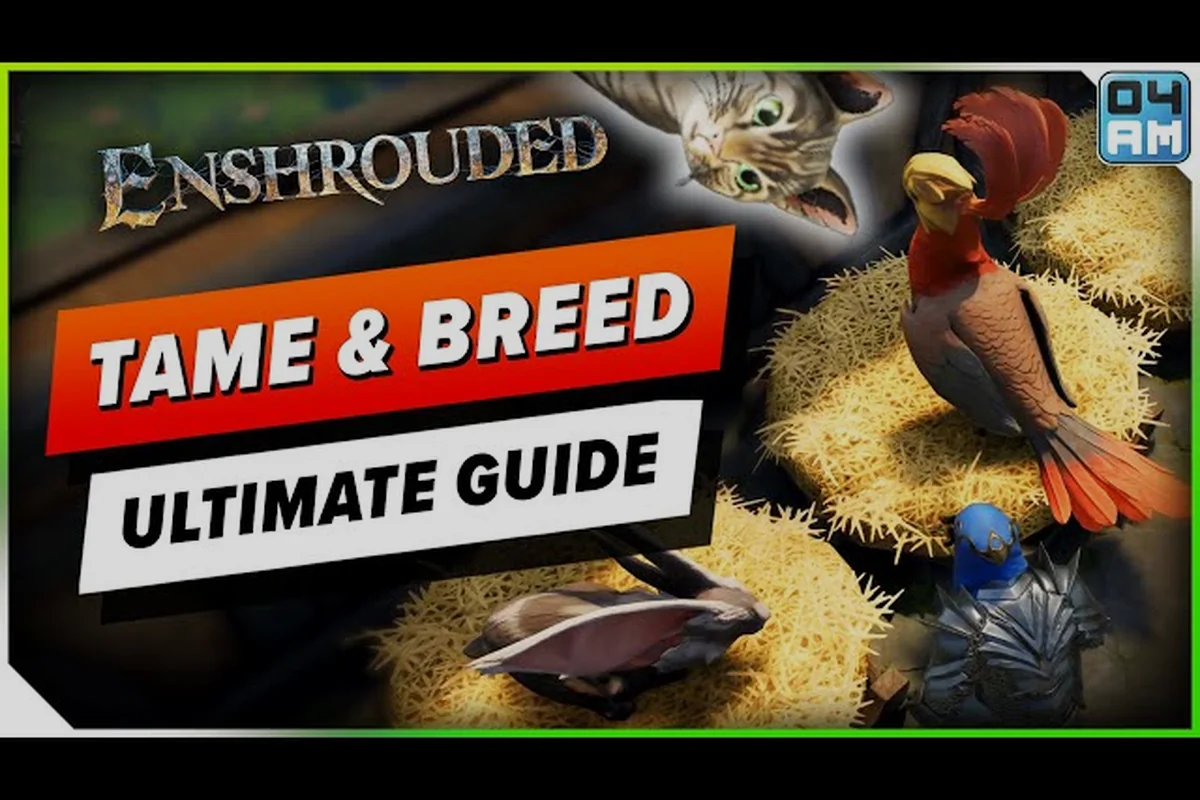
Enshrouded animal NPCs are some of the easiest companions to overlook, yet they quietly turn a lonely base into a living settlement. This Enshrouded animal NPCs guide walks you through adopting cats and dogs, assigning villager jobs, and unlocking the Barber so you can reshape your Flameborn's look whenever you want.
How Animal NPCs Fit Into Your Base
Animal companions in Enshrouded are not combat pets. They wander your base, rest near beds and fireplaces, and add a layer of life that makes a rescued settlement feel inhabited rather than abandoned. According to the official Steam store page, Enshrouded blends survivor rescue with base building, and animals sit squarely inside that loop: you bring them home, they stay, and they reward you with atmosphere and small quality-of-life perks.
The key thing to understand is that animals behave differently from the human survivors you rescue across Embervale. Human NPCs unlock crafting stations, vendors, and quests, while animals mostly provide ambiance and a sense of progress. Both systems share the same housing requirement, so planning your base layout early pays off later.
Here is how the two companion types differ at a glance: human survivors and animals share the identical Bed + shelter housing requirement, but only humans unlock crafting stations, vendors, and quests — cats, dogs, and other animal NPCs return ambiance and companionship instead, while farm animals sit in a middle tier that needs a pen and fodder yet still contributes partial station unlocks. That single distinction shapes every layout decision, because a bed you place for a cat is functionally the same furniture slot a rescued survivor will claim later.
| Companion Type | Primary Function | Housing Need | Unlocks Stations |
|---|---|---|---|
| Human survivors | Crafting, vendors, quests | Bed + shelter | Yes |
| Cats | Base ambiance, companionship | Bed + shelter | No |
| Dogs | Base ambiance, companionship | Bed + shelter | No |
| Farm animals | Resource production | Pen + fodder | Partial |
Because animals do not unlock stations, many players treat them as a late-game cosmetic goal. That is a mistake. Bringing a cat or dog home early gives you a reason to finish your shelter, and finishing your shelter is what lets you rescue the human survivors who actually matter for progression. If you are still laying out your first base, the beginner guide covers the shelter basics that every companion depends on.
Base comfort matters more than most players expect. A crowded, well-lit settlement with beds, warmth, and food keeps both humans and animals content, and a content base is a base you actually want to return to after a long Shroud run.
Where to Find Cats and Dogs
Finding animals is the first real hurdle, and the answer depends on which creature you want. Cats and dogs are not summoned from a menu; you encounter them in the world, and you bring them home through the same rescue framework that governs human survivors. Community reports describe animals appearing near ruined settlements, farmsteads, and abandoned homesteads scattered across the map.
Tracking Down a Pet Cat
Cats tend to show up around quiet, domestic locations rather than combat-heavy ruins. Think collapsed farmhouses, old barns, and the outskirts of villages where people once lived. When you spot one, approach slowly. Animals in Enshrouded are skittish, and sprinting straight at them usually sends them running.
Once you have located a cat, the adoption process mirrors survivor rescue: you need an available bed and enough shelter space at your base. If your settlement is full, the animal has nowhere to go, so clear a slot before you head out. Players who rush this step often find a cat, walk it home, and then discover they cannot actually house it.
Tracking Down a Pet Dog
Dogs follow a similar pattern but appear more often near roads, camps, and the edges of inhabited zones. The same rules apply: spot the animal, approach calmly, and make sure your base has room. Because dogs are slightly more common in the early regions, many players end up with a dog before they ever find a cat.
A practical tip from community testing: mark animal sightings on your map the moment you see them. Animals do not always stay in one place, but knowing which ruins produced a sighting saves you a second sweep of the same area. Pair that habit with the taming and rescue fundamentals in the animal husbandry guide so you understand the full loop before you commit a play session to hunting companions.
| Animal | Common Locations | Approach Style | Housing Requirement |
|---|---|---|---|
| Cat | Farmhouses, barns, village outskirts | Slow, quiet | Bed + shelter |
| Dog | Roads, camps, inhabited zone edges | Slow, quiet | Bed + shelter |
| Both | Ruined settlements | No sprinting | Open bed slot |
Patience is the real skill here. Chasing an animal across three zones wastes time, while a calm approach and a prepared base turn the whole process into a short trip. The reason is mechanical: sprinting or dashing within an animal's detection radius triggers a flee state, and once a dog bolts it can cover enough ground to cross into an adjacent zone before you reacquire it — often into shrouded terrain where you cannot safely follow. Walking, crouching, and pausing between approach steps keeps the animal in its idle wander loop, so a sighting you marked earlier stays roughly where you left it. Before you even set out, place a bed and confirm an open bed slot at your base, since a successful tame fails to register as a resident without one. Players who prep first typically convert a sighting into a housed dog in a single trip, while unprepared hunters burn a full play session re-sweeping ruins they already cleared.
Assigning Villager Jobs and Managing Your Settlement
Once humans and animals share your base, the settlement becomes a management puzzle. Human survivors are the ones who take jobs, and assigning them well is what turns a scattered camp into a functioning town. This is where an Enshrouded villager jobs guide earns its keep, because a badly assigned survivor leaves a crafting station idle while another station sits overloaded.
The general principle is simple: match each survivor to the station their skills support, and keep every station that feeds your progression staffed. Crafting stations that produce building materials and gear upgrades should almost always come first, because they gate everything else you build.
Matching Survivors to Stations
Different survivors bring different talents. Some are natural blacksmiths, others handle alchemy, cooking, or tailoring. When you assign a survivor, check what they can operate and place them where their output actually feeds your next project. A survivor parked at a station you never use is a wasted slot.
| Survivor Role | Typical Station | Priority | Why It Matters |
|---|---|---|---|
| Blacksmith | Forge and anvil | High | Gear and tool upgrades |
| Alchemist | Laboratory | High | Potions and reagents |
| Cook | Cooking station | Medium | Food buffs for combat |
| Tailor | Loom and spinning wheel | Medium | Armor and cloth gear |
| Hunter | Tanning and traps | Medium | Leather and hides |
The stations themselves have their own unlock chains, and several depend on materials you gather early. If your settlement still lacks a furnace or kiln, the kiln and station guide explains how charcoal and basic production stations come online, which is often the missing link between a stalled base and a working one.
Station priority should follow your current bottleneck. If you cannot craft better armor, staff the stations that produce armor materials. If you keep running out of potions, move a survivor to alchemy. Rotating assignments as your needs change is normal and expected.
Unlocking the Barber and Changing Your Appearance
Appearance customization got a significant upgrade with the 1.0 release. According to the official Enshrouded news page, the 1.0 changelog added a Barber named Elio who lets players switch between classic and more realistic character proportions, either at creation or later in the game. That means the look you picked on day one is no longer permanent.
This is a bigger deal than it sounds. Character proportions affect how your Flameborn reads in cutscenes and how armor sits on the model, so players who picked classic proportions early often want to try the realistic set once they see both in action. The Barber makes that switch painless.
How the Barber Service Works
Unlocking the Barber ties into the same survivor and settlement systems that govern every other NPC. Once Elio is available at your base, you can visit and adjust your appearance without starting a new character. Vanity items sit alongside this system, and the changelog notes that vanity gear can be crafted with gold coins from a specific vendor once unlocked.
| Feature | What It Changes | Cost | Availability |
|---|---|---|---|
| Barber (Elio) | Character proportions | Free service | After unlock |
| Classic proportions | Stylized model | Default | From creation |
| Realistic proportions | More grounded model | Default | From creation |
| Vanity items | Cosmetic gear | Gold coins | After vendor unlock |
If you want a deeper breakdown of proportions, sliders, and how appearance interacts with your build identity, the character customization guide digs into the full system. The short version: experiment freely, because the Barber removes the old fear of locking in a look you regret.
Gold coins are the currency behind vanity crafting, so treat them as a cosmetic budget rather than spare change. Vanity gear is purchased from a specific vendor once that vendor is unlocked, which means the real gate is progression, not gold flow — you cannot buy an outfit before the associated NPC becomes available at your base. Because Barber services themselves are free, every coin you hold can go toward vanity sets instead of appearance resets, and saving a small reserve lets you grab a new outfit the moment a vendor unlocks it rather than farming gold mid-session.
Practical Tips for a Thriving Settlement
Managing animals, survivors, and appearance all at once can feel like spinning plates. A few habits keep the whole system running smoothly, and most of them come down to planning before you act rather than fixing problems after they appear.
-
Reserve two spare beds before you go animal hunting, so a successful trip never ends in disappointment.
-
Assign survivors the day you rescue them, rather than leaving them idle while you explore.
-
Keep a gold coin reserve for vanity items instead of spending it all on consumables.
-
Mark animal sightings on your map so a second sweep is fast if the first attempt fails.
-
Revisit assignments after major unlocks, since new stations change which roles matter most.
Settlement flow is the real goal. When beds, stations, and companions all line up, you spend less time micromanaging and more time exploring the Shroud, which is ultimately where the best loot and story beats live. Players who treat base management as a chore tend to burn out; players who treat it as a small puzzle tend to keep playing for hundreds of hours.
Frequently Asked Questions
Can I have both a cat and a dog at the same base?
Yes, as long as you have enough beds and shelter space for each animal. Cats and dogs do not conflict with each other or with human survivors, so a well-built settlement can house all three companion types at once without any penalty to comfort or function.
Do animals in Enshrouded provide any combat help?
No. Cats and dogs are purely ambient companions that wander your base and add life to the settlement. They do not fight, gather resources, or unlock stations, so treat them as a comfort and cosmetic goal rather than a gameplay advantage you need for progression.
Is the Barber available from the start of the game?
The Barber becomes available after you unlock the service tied to the 1.0 update, which introduced Elio and the new proportion options. Once unlocked, you can switch between classic and realistic proportions freely, so your initial creation choices are never truly permanent.
What happens if my base is full when I find an animal?
The animal cannot join your settlement until you free up a bed and enough shelter space. Build an extra bed before you go hunting, or expand your shelter, then return to the same area and attempt the approach again with the space already prepared.
Do villager job assignments affect animal comfort?
No, job assignments only apply to human survivors. Animals simply need a bed and shelter to stay content. Keeping your settlement warm, lit, and well-fed still matters for overall base comfort, but it is the human staffing that drives crafting output and progression.
Bringing cats and dogs home, staffing your survivors wisely, and unlocking the Barber all feed the same goal: a base that feels worth defending. Start with a spare bed, rescue your first companion, and let the settlement grow from there.