
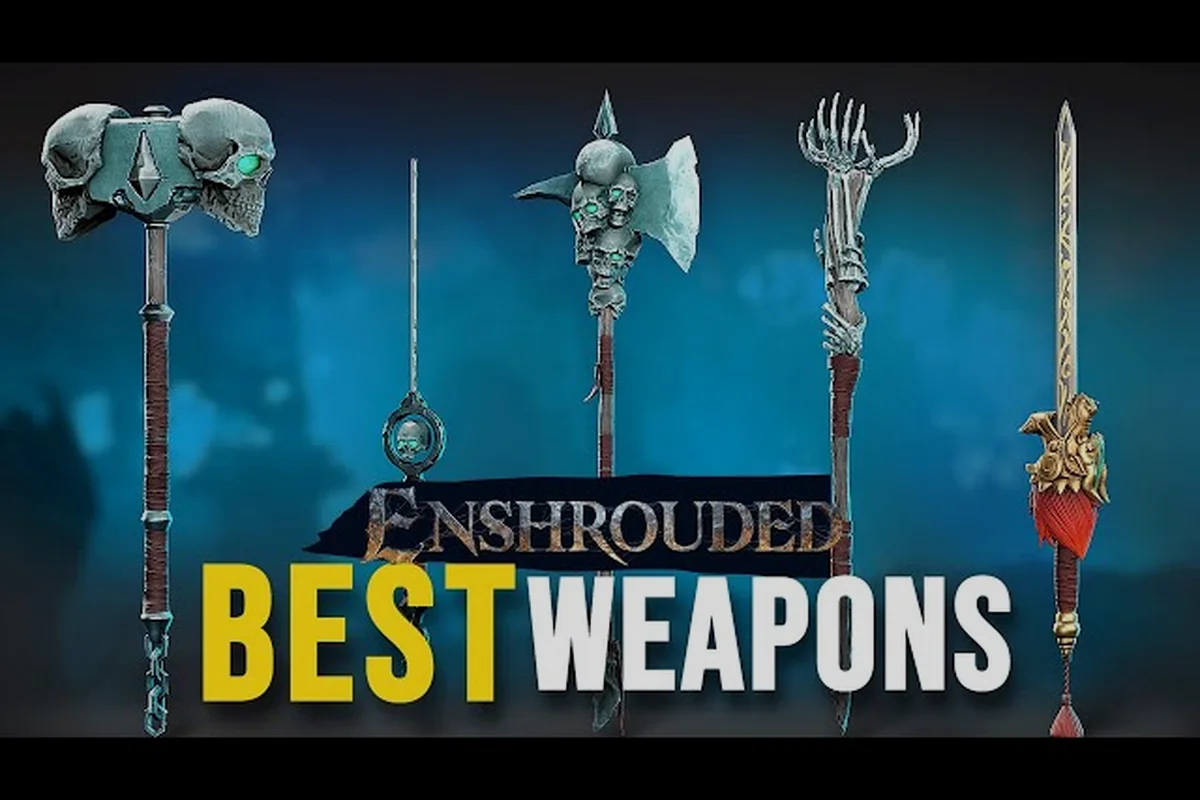
Enshrouded's 1.0 launch reshaped combat in ways that matter to anyone choosing a blade, so this Enshrouded weapons guide focuses on what actually changed. Wands now have heavy attacks and free-aim, dagger skills relocated to the Assassin tree, and blocking follows your camera. Get the details before you commit a build.
How 1.0 Reshaped Weapon Variety
The full 1.0 release moved Enshrouded out of early access and into a finished survival action RPG, and the combat patch notes read like a love letter to weapon variety. According to the Steam's Enshrouded news hub, three changes stand out for anyone building around a specific weapon type.
First, wands gained heavy attacks plus free-aim, along with evasive and aerial attacks. That single change turns the wand from a lock-on poke tool into a real combat option with aiming skill expression. Before 1.0, wand DPS was capped by the auto-lock cadence — you could only fire on the game's schedule, so a pure wand build plateaued against Shroud-heavy mobs. Free-aim removes that ceiling: you can now lead shots on strafing Fell enemies, land aerial casts on knockdown windows, and weave an evasive cast to reposition mid-fight. Combined with the heavy attack's burst, a wand/staff hybrid finally competes with melee builds for the enshrouded best weapon for each class slot, provided you invest in the skill nodes that scale cast damage.
Second, dagger skills moved out of the Warrior area and into the Assassin tree. If you built a dagger character before 1.0, your point allocation assumptions are now wrong. Daggers were already the highest single-target burst option for backstab windows, but the old Warrior placement forced dagger builds to spend points on melee survivability nodes like health and armor scaling that a stealth-oriented Assassin playstyle never uses. Now the Assassin tree bundles dagger damage multipliers, backstab crit scaling, and evasion passives into one path, so a dual-dagger build can reach its damage ceiling with far fewer wasted points. If you were running a Warrior/Assassin hybrid purely to unlock dagger nodes, you can now respec those points into Assassin's crit and mobility passives instead — a meaningful shift for anyone refining their enshrouded one handed weapon guide setup around dagger-and-shield or dual-dagger play.
Third, blocking now uses the camera direction, which makes shield play feel far more responsive than the old directional guesswork. Before 1.0, your block angle was locked to a fixed value regardless of where you were looking, so a Fell brute circling behind you could land hits even while your shield was raised. Now the block arc follows your camera, meaning you simply face the threat and hold block — the game reads your intent from where you aim. This matters most for anyone running a one-handed weapon and shield setup: you can strafe around a Shroud enemy while keeping your guard pointed at it, then punish the recovery window with a quick counter. It also pairs cleanly with the dagger-and-shield builds freed up by the Assassin tree changes, since you no longer need a Warrior's defensive nodes to survive a flank.
Weapon gems were also rebalanced in the same patch. The Gem of Toxic Reaction jumped from roughly +21% damage per second at level 10 to +65% at level 50, and gems no longer harm base animals — a quality-of-life fix for anyone farming near their base.
| Change | Before 1.0 | After 1.0 |
|---|---|---|
| Wand attacks | Basic cast only | Heavy, evasive, aerial, free-aim |
| Dagger skills | Warrior tree | Assassin tree |
| Blocking | Fixed direction | Camera-relative |
| Gem of Toxic Reaction | +21% DPS at level 10 | +65% at level 50 |
| Gems vs. animals | Damaged base animals | No longer harms them |
These aren't cosmetic tweaks. They change which weapons feel good to level and which skill trees pay off. A wand build that once stalled at the auto-lock DPS ceiling now scales through cast-damage nodes for real endgame output, while a dagger player who sank points into Warrior health and armor nodes can respec that investment into Assassin crit and evasion passives. Camera-relative blocking similarly reshapes shield builds: you can strafe a circling Fell brute while keeping your guard aimed at it, then counter in the recovery window without needing Warrior defensive nodes to survive a flank.
The Enshrouded Weapon Tier List for 1.0
Ranking weapons in a survival RPG is always contextual, because a greatsword that shreds a Shroud boss may feel sluggish against fast trash mobs. Still, community testing since launch has settled into a rough consensus, and the table below reflects that shared experience rather than a single player's preference.
| Tier | Weapon Type | Why It Sits Here |
|---|---|---|
| S | Wand (post-1.0) | Free-aim plus heavy attacks, safe range, scales with Intelligence |
| S | Two-handed mace | Huge stagger, breaks guard, ideal for bosses |
| A | Greatsword | Wide arcs, strong vs. groups, slower wind-up |
| A | One-handed sword + shield | Camera-relative blocking makes it far stronger |
| B | Dagger | High crit, but requires Assassin investment |
| B | Bow | Excellent ranged chip, weaker in melee panic |
| C | One-handed axe | Solid but outclassed by sword utility |
The wand's jump to S-tier is the headline. Before 1.0 it was a support weapon; now it's a legitimate primary for a mage build. Meanwhile the two-handed mace remains the boss-killer because stagger interrupts enemy combos, and the greatsword is the crowd-control pick when you're clearing camps.
If you're still deciding how weapon choice fits into a broader archetype, the class guide breaks down how Warrior, Ranger, and Battlemage trees interact with each weapon family. The short version: your weapon tier depends heavily on which tree you've invested in, so a B-tier dagger in the hands of a fully specced Assassin outperforms an A-tier sword on an unspecced character.
Why Tier Lists Shift With Your Build
A weapon's rank is not fixed. The Gem of Toxic Reaction rebalance alone pushed certain elemental builds up several notches, because a +65% DPS gem at level 50 is a massive multiplier on any fast-hitting weapon. Fast weapons — daggers, one-handed swords, wands — benefit disproportionately from percentage-based gems.
That's the practical takeaway: if you're running a high-level gem setup, favor weapons with fast attack speed to maximize the multiplier. A level 50 Gem of Toxic Reaction at +65% DPS adds roughly 650 flat damage per 1000 base DPS — so a dagger swinging 1.8 times per second stacks that bonus far faster than a greatsword landing 0.7 swings per second, even when the greatsword's raw damage per hit is higher. The same logic applies to percentage-based gems like Gem of Fireball or Gem of Ice, which scale off hit frequency rather than weapon base damage.
Enshrouded Best Weapon for Each Class
Matching a weapon to your class is the single biggest damage decision you'll make. Each of the five archetypes in the table below is gated by a distinct skill-tree payoff: the Warrior's Two-Handed tree converts mace hits into stagger buildup that interrupts boss wind-ups, while the Battlemage's Intelligence scaling only applies to wands, not staves, making the wand the correct caster pick for free-aim weak-point sniping. The Ranger's Bow tree stacks crit chance per point of distance traveled by the arrow, and the Assassin's Dagger tree trades raw damage for backstab multipliers and mobility resets. The table below maps the three core archetypes to their strongest 1.0 options, based on how each skill tree rewards specific weapon behaviors.
| Class / Archetype | Best Weapon | Key Synergy |
|---|---|---|
| Warrior (tank/melee) | Two-handed mace | Stagger + camera-relative block |
| Battlemage (caster) | Wand | Free-aim + Intelligence scaling |
| Ranger (ranged) | Bow | Distance + crit stacking |
| Assassin (hybrid) | Dagger | Crit + mobility skills |
| Juggernaut (bruiser) | Greatsword | Wide cleave + crowd control |
The Battlemage is the biggest winner from 1.0. Free-aim means you can lead moving targets and hit weak points, and heavy attacks give the wand a burst option it never had. Stack Intelligence and Potency to push wand damage, and pair it with mana-friendly food so you can sustain free-aim casting through long fights.
The Warrior archetype leans on the two-handed mace because stagger is king against bosses. Camera-relative blocking also makes a shield-and-mace setup genuinely viable now, since you can actually face the attack you're trying to block. For the Ranger, the bow stays the ranged backbone, but the 1.0 changes don't touch it much — so its relative power dropped slightly as wands rose. If you want ranged damage with more utility, a wand build may now compete directly.
The Dagger Question After the Skill Move
Daggers are the most misunderstood weapon in 1.0. Because dagger skills moved to the Assassin tree, players who invested in Warrior expecting dagger support now find those points stranded. The fix is either a respec or a pivot to a two-handed weapon that matches Warrior synergies.
For players who commit to Assassin, daggers reward aggressive, mobile play — you're stacking crit chance and using mobility skills to reposition. The damage ceiling is high, but the floor is lower than a mace build because you can't just facetank hits.
Enshrouded Greatsword Guide: Two-Handed Play
The greatsword is the classic crowd-control two-hander, and the Enshrouded greatsword guide boils down to timing and positioning. Its wide arcs hit multiple enemies, which makes it the best pick for clearing camps and Shroud mobs, but its slow wind-up punishes mistimed swings.
Key greatsword habits: start the wind-up early so the arc lands the moment the enemy enters range, since the swing's damage comes from the blade's travel rather than the input, and track your stamina bar because a full heavy combo can drain most of a base pool — running dry mid-swing locks you into the recovery animation with no dodge available. Aim the arc at the enemy's body center, not their feet, so the hitbox registers on the widest part of the swing and clips nearby Shroud mobs at the same time. Against Fell enemies that leap, hold your swing until they land rather than swinging into their airborne dodge, and re-position between swings instead of chaining a second heavy attack into a whiffed first one.
-
Commit to the swing — the wind-up is long, so start your attack before the enemy is in range
-
Use the wide arc — angle your swing to catch two or three enemies at once
-
Pair with stamina food — heavy attacks drain stamina fast, and running dry mid-combo is fatal
-
Block with the camera — post-1.0 blocking follows your view, so face the threat and hold
The greatsword's weakness is single-target boss damage. Against a big boss with a tight hitbox, the wide arc wastes damage on empty air, and the slow swing leaves you exposed during the boss's fast combos. That's why the two-handed mace usually beats the greatsword in boss fights — it trades arc width for stagger and single-target punch. If you're gearing a two-hander for endgame, the gear salvage and enhancement guide explains how to recycle old weapons into upgrade materials, which matters because greatswords are expensive to craft and re-roll.
Stamina and the Two-Handed Tradeoff
Every two-handed weapon in Enshrouded trades speed for power, and stamina is the hidden cost. A greatsword heavy attack can drain a large chunk of your bar, so stamina management is as important as raw damage. Eating stamina-boosting food before a fight, and keeping a light backup weapon for when you're drained, keeps you functional through long encounters.
Enshrouded One-Handed and Two-Handed Weapon Guide
The Enshrouded one handed weapon guide and the Enshrouded two handed weapon guide come down to a single question: do you want a free hand for a shield, or both hands for raw power? The 1.0 blocking change tilts this decision firmly toward one-handed plus shield for defensive players.
| Setup | Hands | Best For | Tradeoff |
|---|---|---|---|
| Sword + shield | One | Defensive play, boss tanking | Lower raw damage |
| Axe + shield | One | Balanced offense/defense | Less utility than sword |
| Greatsword | Two | Crowd clearing | Slow, stamina-hungry |
| Two-handed mace | Two | Boss stagger | Narrow hitbox |
| Wand (free hand) | One | Caster hybrid | Mana dependent |
One-handed weapons shine because camera-relative blocking now makes shields reliable. You can hold a shield, face the incoming attack, and actually block it — a huge improvement over the old system. The one-handed sword is the best all-rounder thanks to its balanced speed and reach, while the axe hits slightly harder but lacks the sword's versatility.
Two-handed weapons are the damage ceiling. The greatsword clears groups, the mace staggers bosses, and both demand stamina discipline. If you're playing solo and want one weapon that handles everything, a one-handed sword with a shield is the safest investment; if you're in a group and can rely on teammates to hold aggro, a two-hander lets you deal the burst damage that ends fights quickly.
When to Switch Weapon Types
Weapon swapping mid-fight is a real tactic in Enshrouded. Open with a wand or bow to chip health at range, close with a two-hander for burst, and switch to a one-handed shield setup when you need to survive a boss's enrage phase. Carrying two weapons with complementary roles covers more situations than optimizing a single weapon to perfection.
How Weapon Gems Reshape Your Build
The 1.0 gem rebalance is easy to overlook, but it quietly changes which weapons are worth building around. The Gem of Toxic Reaction scaling from +21% DPS at level 10 to +65% at level 50 means percentage-based gems reward fast-hitting weapons far more than slow ones.
| Gem Behavior | Fast Weapon (Dagger) | Slow Weapon (Mace) |
|---|---|---|
| Hits per second | High | Low |
| Percentage gem value | Maximized | Wasted |
| Best gem type | Elemental % | Flat damage |
| Level 50 scaling | Very strong | Moderate |
The practical rule: pair percentage gems with fast weapons and flat-damage gems with slow weapons. A dagger with a high-level elemental gem can out-damage a mace in sustained fights, while a mace benefits more from flat bonuses that don't depend on hit frequency.
The removal of friendly-fire damage from gem procs against base animals is a quality-of-life change with real build-testing value. In the pre-1.0 version, a Gem of Fireball or Gem of Ice Bolt proc could one-shot a goat, chicken, or yak standing near your crafting stations, forcing you to relocate test dummies or risk wiping your livestock. Now you can slot a candidate gem into a one-handed weapon like the Wolf's Fang or a two-handed greatsword, swing it beside your base, and read the damage numbers on the training dummy without collateral kills. This matters most when comparing a level 50 Gem of Toxic Reaction against a flat-damage alternative, since you can iterate quickly on the same weapon rack instead of rebuilding your animal pen each time.
Matching Weapons to Boss Fights
Boss encounters are where weapon choice stops being preference and becomes a puzzle to solve. Every boss carries hidden resistances to specific damage types, so a greatsword build that shreds Shroud enemies can hit a wall against a fire-resistant Fell Warden, while a wand tuned to its elemental weakness melts the same health bar in half the time. Stagger windows matter just as much: a two-handed mace's poise damage can topple a boss mid-combo, opening a burst window no fast one-handed weapon can create on its own. The Albaneve Summits boss guide covers specific weaknesses, but the general principles apply everywhere.
-
Stagger beats raw damage — a two-handed mace interrupts boss combos, buying you safe windows
-
Range beats greed — wands and bows let you chip health without eating a melee combo
-
Blocking beats dodging — with camera-relative blocking, a shield can absorb hits a dodge would mistime
-
Elemental gems beat neutral damage — matching a boss's weakness multiplies your output
For most players, the winning boss formula is a two-handed mace for stagger plus a wand or bow for safe ranged chip, switching between them as the fight's phases change. If you're running a pure caster, free-aim wands now let you hit weak points reliably, which closes much of the gap between melee and magic boss damage.
Reading Boss Resistances
Every major boss in Enshrouded has damage-type resistances, and hitting a resistant boss with the wrong element wastes your DPS. Before a big fight, check what the boss resists and swap your gem accordingly. This is where the gem system pays off — a single gem swap can turn a losing matchup into a comfortable win.
Frequently Asked Questions
What is the best weapon in Enshrouded after 1.0?
The wand is arguably the best all-round weapon after 1.0, because free-aim, heavy attacks, and evasive options turned it into a complete combat tool that scales with Intelligence. For boss stagger, the two-handed mace still leads. Your best pick ultimately depends on which skill tree you've invested in.
Did wands really get heavy attacks in 1.0?
Yes. The official 1.0 changelog confirms wands gained heavy attacks along with free-aim, evasive attacks, and aerial attacks. This transformed the wand from a lock-on support tool into a genuine primary weapon, and it's the single biggest reason wands climbed the community tier list.
Where did dagger skills go in the 1.0 update?
Dagger skills moved out of the Warrior area and into the Assassin tree. If you built a dagger character before 1.0 with Warrior points, those allocations no longer support daggers, so you'll need to respec or pivot to a two-handed weapon that matches Warrior synergies.
Is a one-handed or two-handed weapon better for solo play?
For solo play, a one-handed sword with a shield is the safer investment because camera-relative blocking lets you survive hits you can't dodge. Two-handed weapons deal more damage but demand stamina discipline and leave you exposed during slow wind-ups, which is riskier without a teammate holding aggro.
How do weapon gems affect my damage in 1.0?
Percentage-based gems like the Gem of Toxic Reaction now scale dramatically, reaching +65% DPS at level 50, which rewards fast-hitting weapons such as daggers and wands. Slow weapons benefit more from flat-damage gems. Match your gem type to your weapon's attack speed for maximum output.
Final Thoughts on Enshrouded Weapons
The 1.0 update didn't just add content — it rebalanced the entire weapon ecosystem. Wands became real weapons, daggers found a new home in the Assassin tree, blocking finally feels responsive, and gems now reward thoughtful build crafting. The Enshrouded weapons guide above gives you the framework: pick a weapon that matches your class tree, pair percentage gems with fast weapons, and keep a second weapon for the situations your primary can't handle.
Whether you favor the stagger of a two-handed mace or the free-aim precision of a post-1.0 wand, the underlying principle is the same — synergy between weapon, skill tree, and gems beats raw weapon tier every time. Build around your tree, not around a tier list, and you'll clear Embervale's toughest fights.